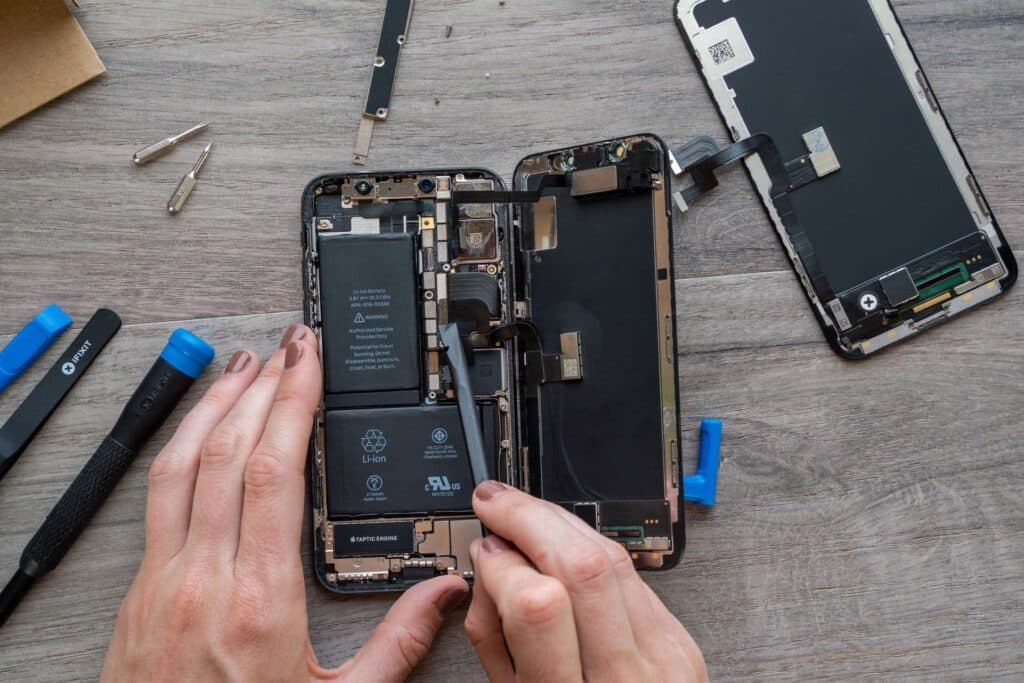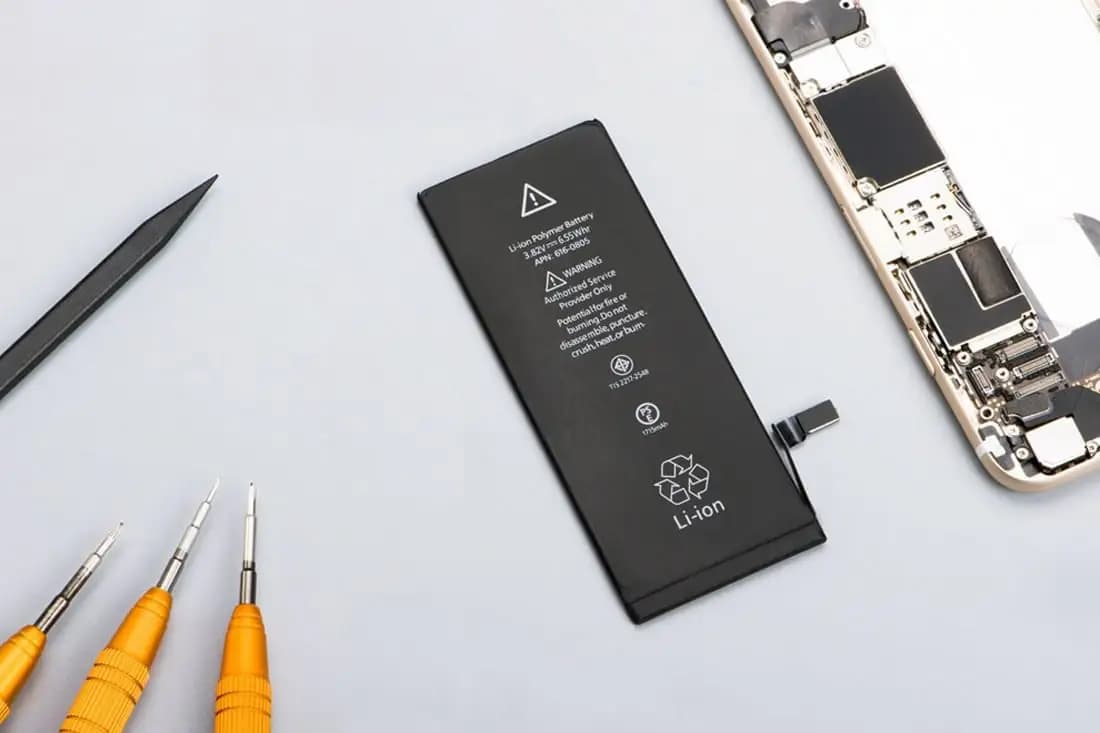
Have you acclimated to your iPhone's below-average performance and accepted it as part of the monotony of life? Has restarting your broken iPhone become a routine and a ritual? Do you long for the days when your apps loaded quickly and you could watch Youtube videos until your battery was at 5 percent?
Everyone knows that there is nothing worse than a bad iPhone battery. Being the resident IT technician for my friends and family, the #1 question I always get is, "Do you think my iPhone needs a new battery?" After the 100th time I've been asked, I thought it would be helpful to put together some guidelines to help Mom determine when it's time to replace her iPhone battery.
1. Your battery outgrew your iPhone
Why are you reading this? If your battery has outgrown its case, it obviously needs to be replaced! Even if it is not swelling that much, immediate steps should be taken to safely dispose of the battery. But beware: you don't want to puncture the package and release its toxic contents. The first signs of a swollen battery include: a fuzzy white screen, separation between the screen and the phone's body, or "soft" screen (no visible separation, but the screen moves a little when you pinch the edges of the phone). Lucky for you, there's no need to panic - we've outlined exactly what to do about a swollen battery here.
2. Your iPhone shuts down unexpectedly
If your iPhone is constantly replacing when the battery is mediocre discharged, it is possible that the calibration is deactivated. To turn the caliber on iPhone, siga estos pasos:
Use your iPhone only if it's just a battery player.
Connect your iPhone to a cargable configable and let it work without interrupts without having to pay 100 per cent.
One of the things that works perfectly, is the fact that the restoration of the maintenance of the boton's repository / activation and the input button (repository / activation and quoting from the volumes of an iPhone X) is very useful.
If this does not solve the problems of the battery, then the battery can be the culprit and will be necessary again.
3. If you’ve got an iPhone 6 or later—and it feels sluggish
If you are running iOS 11.3 or later, you may be a victim of throttling. You can prove or disprove this by following these steps:
Tap the Settings app, select the Battery option from the list, then select Battery status (beta). Under Peak Throughput Capability, if you see this blurb:
…then your phone is being throttled and would benefit from a battery replacement.
4. If you’re an iPhone 5s or earlier owner—and it has terrible battery life
If you are using an iPhone 5s or earlier, your phone is definitely not affected by CPU throttling. That means the only battery issue you may face is shorter usage time. Since all batteries are consumable, the amount of charge they can hold decreases as they age. You've been draining battery capacity over the years since you bought your device, and by now you're probably used to it. However, if your phone can't last two hours without a round of charging and it's driving you crazy, just replace it.
5. Your iPhone only works plugged in
If the battery is completely dead, the phone won’t be able to boot up, even when plugged in. However, if the phone is still able to power up when connected to a power source and function properly, the battery or the battery connector are likely culprits of failure.
6. Your iPhone is hot (like literally, and not in a Mugatu kinda way)
Your iPhone battery generates heat as it recharges. The lithium-ion batteries inside of your smartphone are designed to internalize the heat, shielding it from the other parts of the phone. So if you’re suddenly noticing your phone is too hot to touch, it might be time to consider a new battery. But keep in mind your surroundings—if you’re taking selfies at the beach under the hot sun, it’s probably the sun. Batteries are temperature sensitive, so be sure to protect them accordingly.
A Caveat: Your battery is usually the culprit, but to avoid unnecessary battery replacement, try this quick test:
- Click on the Settings app and select the Battery option on the left menu.
- You will see two timers: Usage and Standby. Jot the numbers down for both.
- Next, press the Power button to put your device into standby mode, and don’t fidget with it for 10 minutes. If you receive a call or text, you will have to restart the process.
- After 10 minutes have elapsed, turn your device back on and note the Usage and Standby times.

The Standby time should have gone up by 10 minutes, but the Usage should not have increased more than 1-2 minutes. If it has, then your woes will not be remedied by a battery replacement. Failure of this test indicates problems that aren’t directly battery-related, and need additional investigation—our Answers forum can help with that!